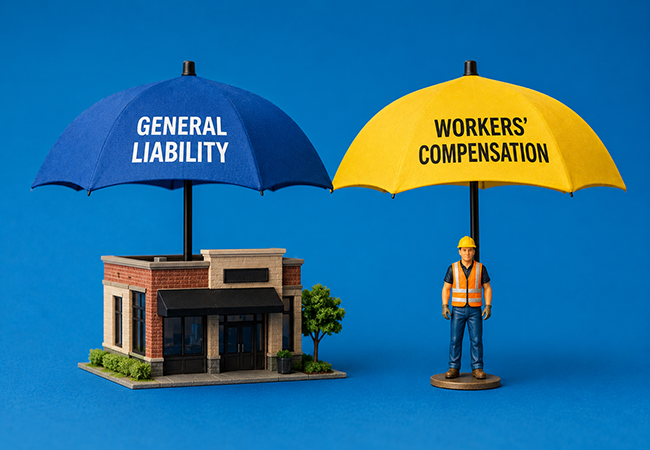

Pay-as-you-go vs traditional workers comp comes down to how your business manages payroll, cash flow, and financial risk. While both provide the same type of coverage, the way premiums are calculated and paid can significantly impact your business operations.
Choosing the right structure is not just a financial decision — it affects how predictable your costs are and how much flexibility you have as your business grows.
How Traditional Workers Comp Works
Traditional workers comp policies are based on estimated annual payroll. At the beginning of the policy, the insurer calculates your premium using projected numbers.
- Premium is based on estimated payroll
- Requires an upfront deposit or large initial payment
- An audit is performed at the end of the policy period
If your actual payroll differs from the estimate, your premium will be adjusted. This often results in additional payments or refunds after the audit.
How Pay-As-You-Go Workers Comp Works
Pay-as-you-go workers comp eliminates the need for estimated payroll by calculating premiums based on actual payroll in real time.
- Premium is calculated per payroll cycle
- Payments adjust automatically based on real wages
- Audit adjustments are minimal or eliminated
This model is typically integrated with your payroll system, allowing for more accurate and consistent billing.
Want a more flexible option? Learn how pay-as-you-go workers comp works and how to get covered without upfront deposits.
Key Differences Between Pay-As-You-Go and Traditional Policies
The main differences between these two options are related to timing, accuracy, and financial impact.
- Upfront cost: Traditional requires larger initial payments, while pay-as-you-go spreads costs over time
- Accuracy: Pay-as-you-go reflects actual payroll, reducing discrepancies
- Audit risk: Traditional policies often result in adjustments, while pay-as-you-go minimizes surprises
These differences can have a major impact on how predictable your insurance costs are throughout the year.
Key Benefits of Pay-As-You-Go
Many businesses prefer pay-as-you-go because it aligns insurance costs with actual operations.
- Improved cash flow management
- Lower upfront financial burden
- Reduced risk of large audit adjustments
- More accurate cost tracking
This is especially useful for businesses with fluctuating payroll or seasonal work.
When Traditional Policies Make More Sense
Traditional workers comp can still be a good option in certain situations.
- Businesses with stable and predictable payroll
- Low-risk industries with minimal variation in workforce
- Companies that prefer fixed payment structures
In these cases, the simplicity of a traditional policy may outweigh the flexibility of pay-as-you-go.
Which Option Is Better for Your Business?
The best choice depends on how your business operates.
- If your payroll changes frequently → pay-as-you-go is usually better
- If your payroll is stable → traditional policies may work fine
Understanding your payroll patterns is key to making the right decision.
Conclusion
Pay-as-you-go and traditional workers comp offer the same coverage, but their cost structures are very different. The right choice depends on your business size, payroll variability, and cash flow needs.
Aligning your policy structure with your operations can reduce financial stress and improve long-term cost control.
Compare workers comp options and find the right fit for your business:
Get started